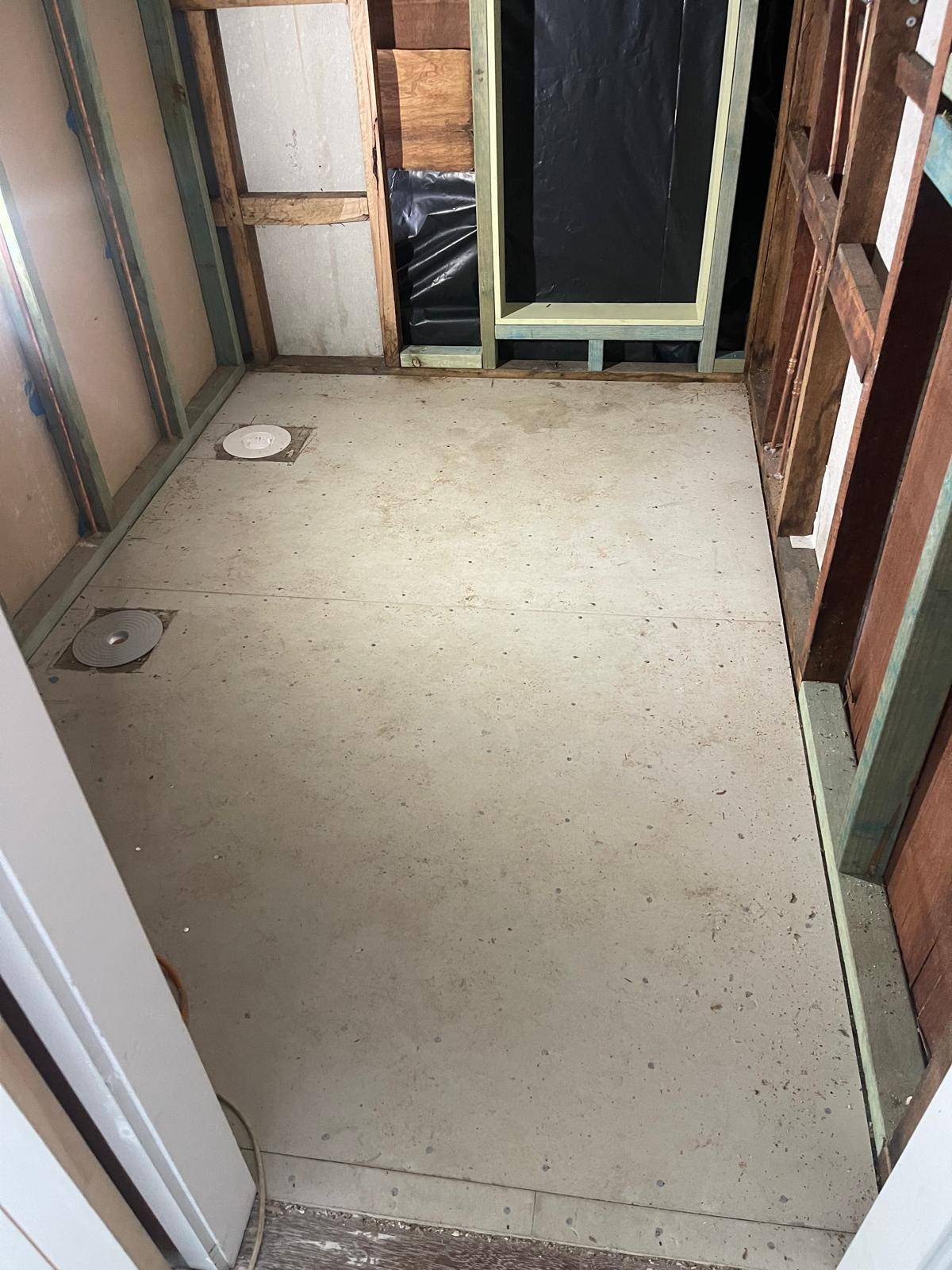
The fundamental questions were not being asked, nor addressed. It’s not just about the type of waterproofing used or its placement (above or below the screed) but also about the substrate and how waterproofing functions. We have remediated over 1000 projects, 75% of which used lightweight construction like timber framing.
Did you know that all waterproofing cannot elongate unless there is a separation from the surface? For instance, cement sheeting applied to timber frames typically includes expansion joints around 1200x2400mm sheets, yet the timber beams and bearers that these sheets sit on, are often only 600mm apart. Framed dwellings are built to move, and when they do, they create micro-movements that directly adhere to waterproofing membranes that cannot withstand them, leading to cracks and failures.
For eight years, we have approached this from a remediation standpoint, repairing tiled surfaces with Remedial Membranes’ Clear Waterproofing Membrane. However, it became evident that merely earning money from fixes was not good enough. Armed with our comprehensive experience and understanding, we are now stepping forward to offer solutions that prevent these issues before they occur, ensuring a deeper impact on the industry and providing a real solution.
Issue: The main issue that occurs in waterproofing today is that the substrate moves more than what the membrane can tolerate for whatever reason.
Answer: Don’t adhere the membrane to the substrate; then, there will be no issues with it moving!
The solution is simple: avoid adhering the membrane to the substrate to eliminate movement issues.
Consider the following ways that water is effectively controlled in other areas of construction:
- How do we stop water from transferring through a poured slab? We put down builder’s plastic first.
- How do we stop water from transferring through porous brick? We apply a plastic damp course.
- How do large ponds hold water without transferring the water through? They use a plastic liner.
These products, although different, are effective.
When was the last time you heard of someone having rising dampness issues after they applied Builders Plastic? Have you ever seen it on the list of home warranty defects? No, us neither.
The primary cause of building failures is undoubtedly movement. However, the problem isn’t the movement itself—that’s how buildings are constructed to move without cracking; it’s that the membranes adhered to these surfaces cannot tolerate this movement.
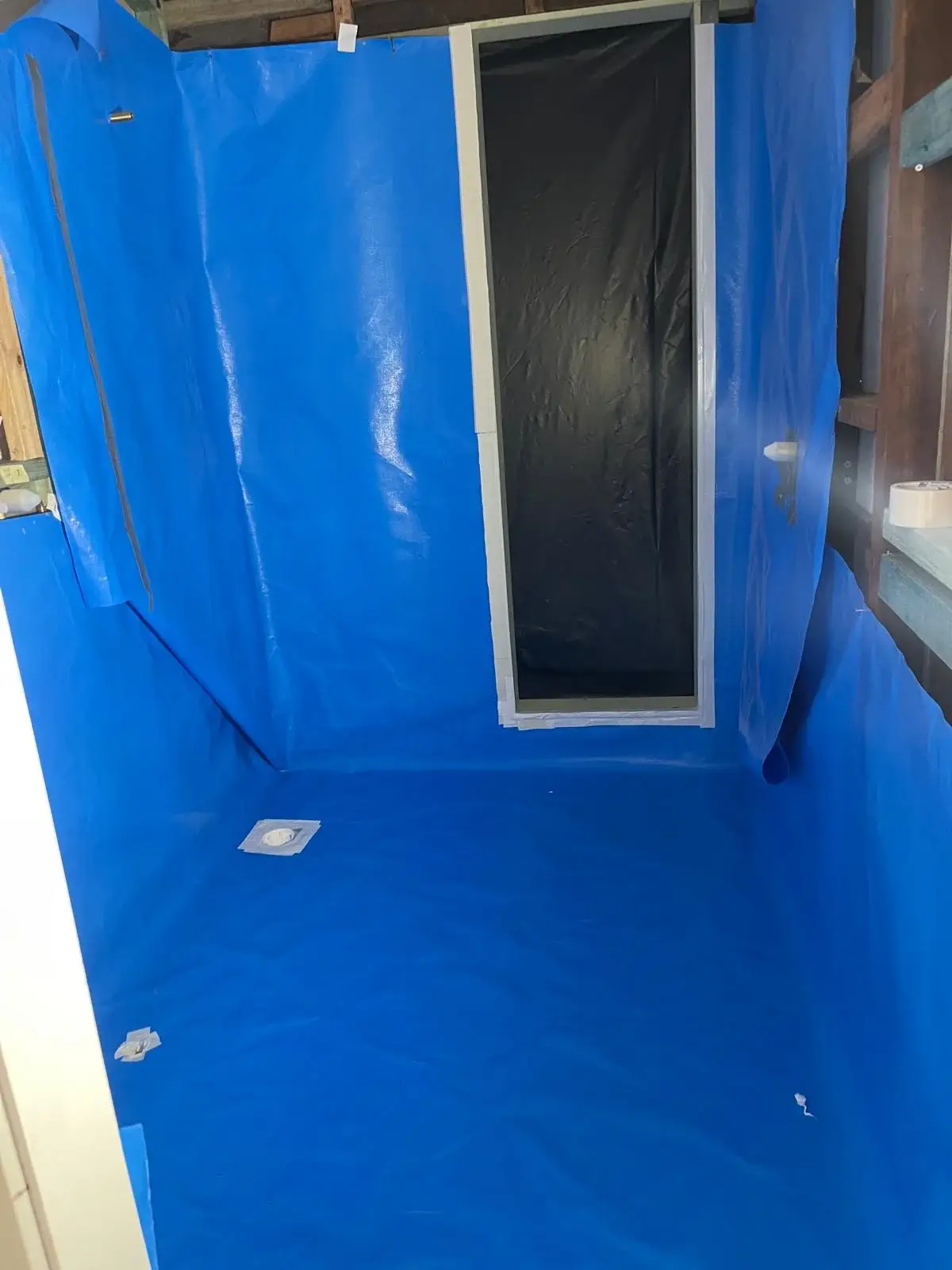
Our solution, based on our understanding and hands-on experience, is simple; the membrane below the screed should be loosely laid with minimal or no adhesion to the substrate, allowing the building to move without impacting the membrane. We have taken time to test and develop our own positive and negative pressure loose-laid membrane, which is competitively priced and quick to apply without drying time, allowing immediate installation of the screed.
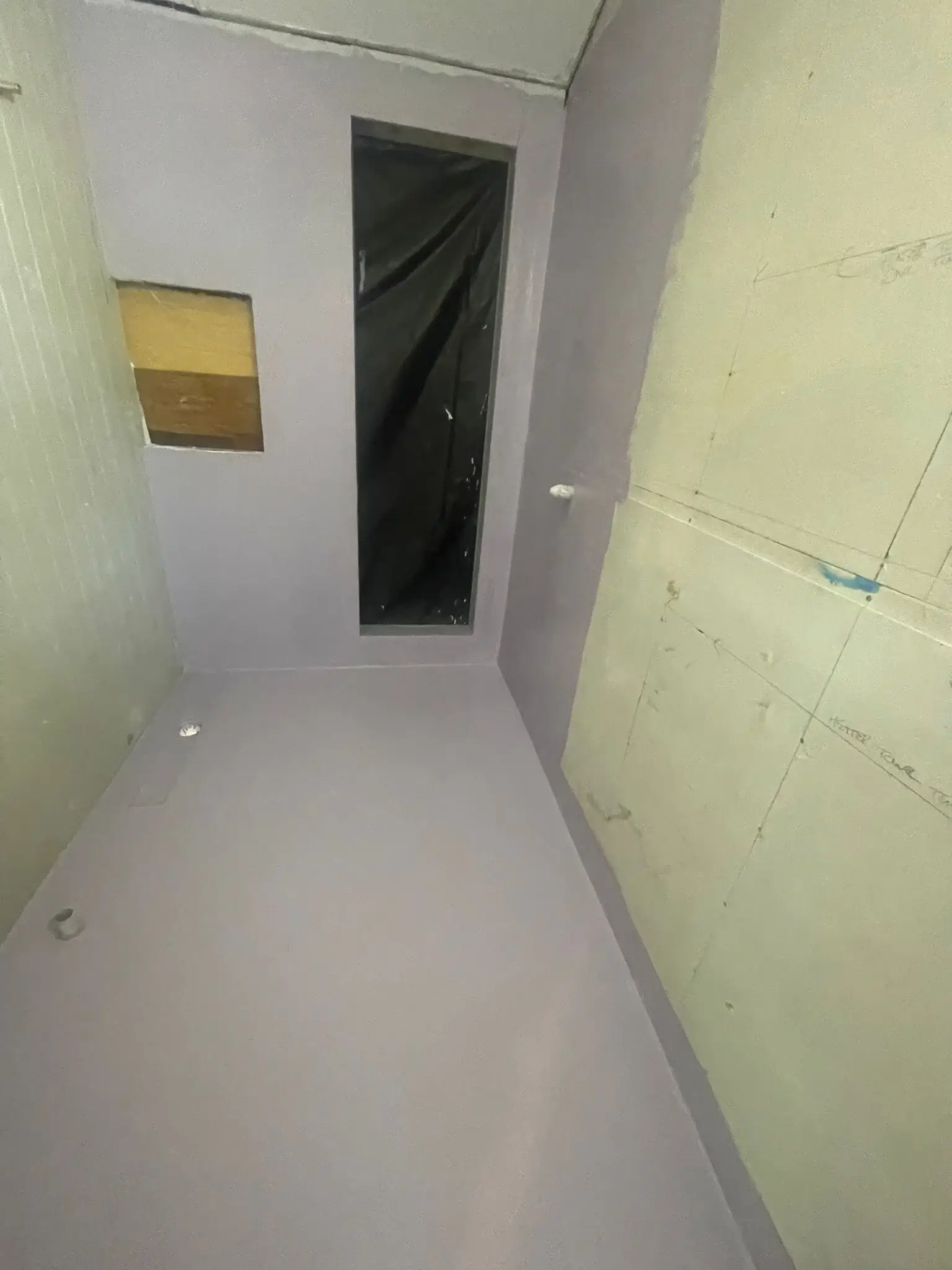
We recognise the importance of compliance with BCA requirements. Alongside our Loose Laid Liner, we also supply a Liquid Applied Polyurethane for direct stick applications, ensuring over 25 years of protection.
For those unable to install this system in their homes, we offer the Tank’d Clear for over-tile waterproofing without the need to remove tiles.